
Donate

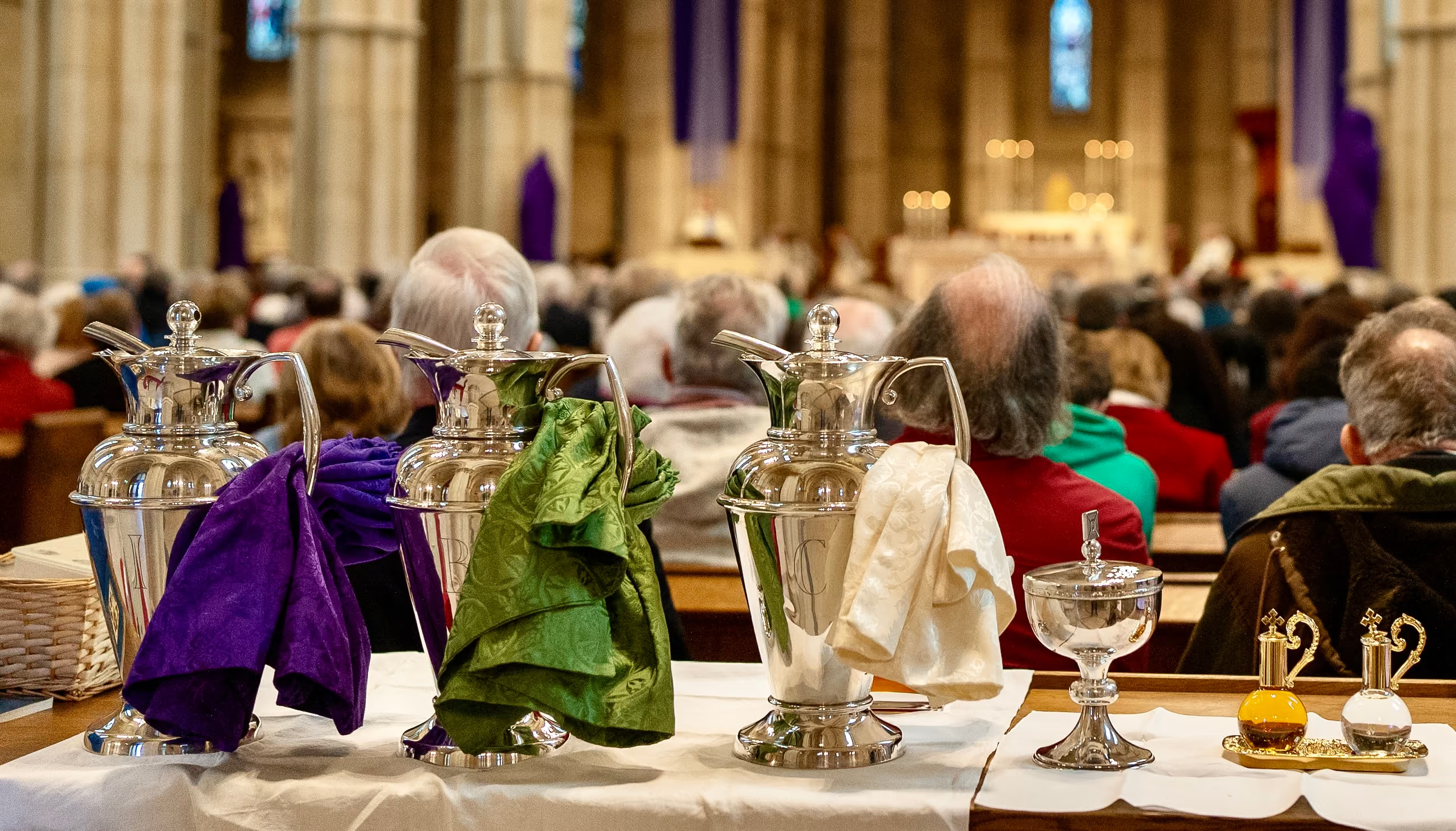
As we approach Holy Week our thoughts and prayers are very much on the ongoing conflict in the Holy Land. In an act of deep symbolism and solidarity, a number of Catholic and Anglican Dioceses have again chosen Palestinian Olive Oil as the base for their Holy Oils. These include our Diocese and the Archdiocese of Birmingham, and the Anglican Dioceses of Coventry, and Southwark. Reflecting on the continued suffering of those living in the Holy Land, a representative from Pax Christi, the International Catholic Movement for Peace, said:
"[We are] deeply shocked by all the suffering we see imposed on those in the Holy Land. We have seen indescribable mass destruction of lives, homes and land in Gaza, and the people of the West Bank are seeing destruction and violence that goes far beyond the harassment and obstruction they have experienced for decades...
"The last olive harvest in Palestine was one of the most difficult in memory. Across the West Bank farmers have faced violence, intimidation and the constant fear of attack. Armed settlers have blocked access to olive groves, set fire to trees and vandalised property. Some have assaulted farmers and their families or threatened them with guns and batons. In some areas, olive trees have been bulldozed or uprooted by the Israeli army. Harvesting for many has become as act of defiance and resilience. Families have had to make an unthinkable choice - to stay away from their groves and let the olives fall, rather than risk their lives and that of their families.
"Never has our solidarity and support for the Holy Land been needed more and this Easter it's good to know that we can be linked in such a special way, through the use of olive oil from the Holy Land, to the Palestinian families who have produced the oil that will be used throughout the year in the Sacraments of the Sick, Baptism and Holy Orders and in the anointing of new bishops."
Canon Rob Esdaile, parish priest of St Dunstan's, Woking, has campaigned for peace and justice for many years, reflecting on the significant challenges faced by Palestinian farmers he said:
"The olive tree has long been a symbol of the heritage of the inhabitants of the Holy Land. Psalm 133 uses the vivid image of olive oil running down a man's beard as a symbol of peace in the community and of 'brothers dwelling in unity', while the same oil was used by Samuel to anoint both King Saul and King David...
"In the face of military blockades and the theft of land [the annual olive harvest] has become a symbol of resistance and hope. Our liturgical use of Palestinian olive oil is both an act of solidarity and a very physical prayer for the peace of Jerusalem and of the whole Holy Land."
While we take part in the services of Lent, Holy Week, Easter and Pentecost, we remember that since the war on Iran, all Palestinian places of worship in Jerusalem have been closed by the Israeli Authorities... denying access to worship for Muslims and Christians. We are asked to keep them in our prayers as we hope for a Just Peace for all in the Holy Land."
Following our diocesan Chrism Mass at Arundel Cathedral on Wednesday 1 April, the holy oils will be taken to each parish, where they will be used for sacramental anointing throughout the year.
Source: ICN


